Applied Social Science and Systems Approaches for Managing Wildlife
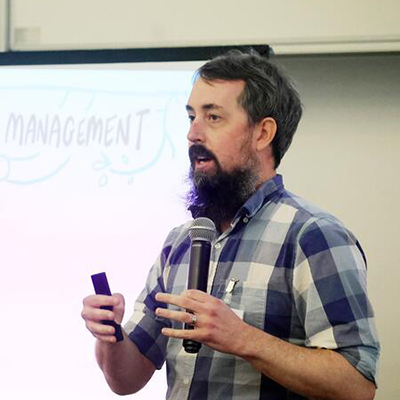
Main Speaker: Dr. Ricky Berl
Research Social Scientist , USGS National Wildlife Health Center
Date: 9/2/2026
Time: 3:30 PM
Location: 107 South (Platte River Auditorium)
Abstract
Wildlife management in North America is built upon a strong scientific tradition from the biological and environmental sciences, using monitoring of populations and ecosystems to inform decision making and maintain the health and sustainability of these resources. However, influences from human activities and social systems are often primary determinants of wildlife distributions, abundances, and health, while still only rarely being considered directly as part of management decisions and interventions. Concurrently, management objectives and actions are driven by human relationships and interactions with the environment and the values that people hold toward wildlife, and are primarily concerned with providing benefits to people. To consider wildlife management as being situated within and contributing to an integrated social-ecological system opens up the potential for more sophisticated approaches to integrating insights from human dimensions and the conservation social sciences. This talk will use examples from waterfowl harvest and chronic wasting disease to illustrate emerging avenues for applied social science methods to inform wildlife management.
Speaker's Bio
Ricky is a conservation social scientist with a background in evolutionary theory, behavior, and culture change, who uses integrative quantitative and qualitative approaches to address the management challenges that arise from the complex interactions within rapidly changing social-ecological systems, particularly those related to wildlife health and the impacts of chronic wasting disease.Speaker's Contact Information
- rberl@usgs.gov
Video
Water, Agriculture, Development, and the Circles Project in Kenya
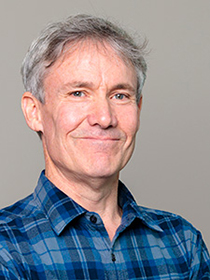
Main Speaker: Dr. Jude Cobbing
Water Resource and Environmental Specialist , Nebraska Water Center, Daugherty Water for Food Global Institute, and SNR | UNL
Date: 9/9/2026
Time: 3:30 PM
Location: 107 South (Platte River Auditorium)
Abstract
Small- to medium-sized commercial agriculture is essential to employment and economic growth in Africa. But small-scale subsistence farming is most common. Moving into commercial irrigated farming needs capital, markets, know-how, skills, water, and land, amongst other things. This transition can be a surprisingly complicated problem.
A consortium of partners, including UNL’s Daugherty Water for Food Global Institute, is working on a novel concept in the highlands of Kenya, East Africa – part commercial farm, part training center, and part research institution. It will provide training in modern, high-value irrigated agriculture, whilst at the same time researching diverse elements of the agricultural transition. The project will be self-sustaining, and replicable in other parts of Kenya and elsewhere in Africa. We hope it will be a gamechanger.
In this talk I’ll describe the Circles Project concept and outline how IANR, UNL, and Nebraska will be involved. There’ll be plenty of time at the end for questions.
Speaker's Bio
Jude is a water resource and environmental specialist with 23+ years of experience in the public, research, non-profit, and private sectors. His interests include groundwater resource assessment and planning, water supply and sanitation in low-income contexts, environmental project management, groundwater strategy development, transdisciplinary research, water quality, and agriculture. His work links groundwater resource evaluation and management to water supply, food security, climate, rural livelihoods, and environmental resilience. Jude has worked in Africa, Asia, North America, and Europe, and has experience in the agriculture, mining, and power generation sectors, in rural and domestic water supplies, and in transboundary water resource evaluation. He has a BS in Geology and English from the University of Cape Town, a postgraduate teaching diploma from the University of South Africa, an MS in hydrogeology from London University, and a PhD in groundwater management from Nelson Mandela University, Eastern Cape, South Africa.Speaker's Contact Information
- jcobbing@nebraska.edu
Video
Harnessing Critical Zone Chemistry to Proactively Protect Groundwater in Nebraska and Beyond
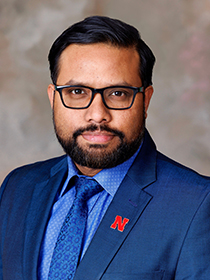
Main Speaker: Dr. Arindam Malakar
Water Research Scientist , Nebraska Water Center, Daugherty Water for Food Global Institute, and SNR | UNL
Date: 9/16/2026
Time: 3:30 PM
Location: 107 South (Platte River Auditorium)
Abstract
Nitrate contamination of groundwater is a global consequence of intensive agriculture. In Nebraska, it drives some of the highest drinking water violations in the United States and imposes treatment costs on communities. Concentrations continue to rise even where land surface nitrogen application has been reduced. The reason lies below the root zone. Tens of meters of unsaturated sediment separate cropland from the water table, and this vadose zone has long been treated as inert plumbing. Here we show that it is chemically active, and that its chemistry can be managed. Building on four decades of Nebraska vadose zone records, we collected deep sediment cores across 18 Natural Resources Districts. The cores covered different irrigation practices and native prairie. We measured the full suite of reactive nitrogen species rather than nitrate alone. Nitrate stocks were higher beneath gravity irrigation than beneath center pivot, which applies 62–70% less water. Ammonium showed the opposite pattern. Reduced iron was present in unsaturated sediment, and iron-coupled dissimilatory nitrate reduction most likely drives ammonium formation in the vadose zone. Organic nitrogen accounted for 85–92% of subsurface nitrogen beneath managed land. Identifying the chemical environment guided the geochemical modeling of the redox states that favor nitrate reduction. Ultimately, we created conditions favoring nitrate remediation and lowered vadose zone nitrate by ~40% relative to the control in controlled experiments. These results establish the deep vadose zone as an intervention point for protecting groundwater proactively.
Speaker's Bio
Dr. Malakar received his Ph.D. in 2017. In his Ph.D., he worked across three continents, which include the Indian Association for the Cultivation of Sciences, Kolkata, the University of Calcutta, India, one of the top-ranking research facilities in India, the University of Cagliari, Cagliari, Italy, and the University of Nebraska at Lincoln. International Center for Theoretical Physics (ICTP) and the European Union supported his graduate research in Europe. Malakar is a recipient of the prestigious "Water Advanced Research and Innovation (WARI)" Internship Program, supported by the Department of Science and Technology, India, the University of Nebraska–Lincoln, the Daugherty Water for Food Institute (DWFI), and the Indo-US Science and Technology Forum (IUSSTF). He has received the Young Scientist award from the Materials Research Society of India for his excellent research in improving water quality. He works with the local stakeholders and leads research efforts to understand the impact of land surface processes influenced by agricultural activities on the state groundwater quality and validate and verify next-generation cropping system models. His research focuses on understanding nitrogen, carbon, and metal dynamics in the agroecosystem and critical zone.
Speaker's Contact Information
- amalakar2@unl.edu
The State of U.S. Agroforestry: Insights from the National Agroforestry Producer Survey
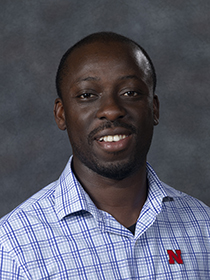
Main Speaker: Dr. Lord Ameyaw
Forester , School of Natural Resources | UNL
Date: 9/23/2026
Time: 3:30 PM
Location: 107 South (Platte River Auditorium)
Abstract
The National Agroforestry Producer Survey provides a national look at how producers are using and managing agroforestry practices across the United States. With responses from 5,682 producers, the survey covers the five main agroforestry practices in the US: alley cropping, forest farming, riparian forest buffers, silvopasture, and windbreaks. This seminar will focus on findings published so far for riparian forest buffers, silvopasture, and windbreaks, including how these practices are established and managed, the benefits and challenges producers experience, and how producers see the future of these systems. The presentation will also highlight what these findings may mean for research, technical assistance, and efforts to expand agroforestry in the United States.
Speaker's Contact Information
- lameyaw2@unl.edu
Reversing ecosystem disservices caused by agriculture: drivers of belowground recovery during grassland restoration
Main Speaker: Dr. Sara Baer
Senior Scientist and Director , Kansas Biological Survey and Center for Ecological Research
Date: 9/30/2026
Time: 3:30 PM
Location: 107 South (Platte River Auditorium)
Speaker's Bio
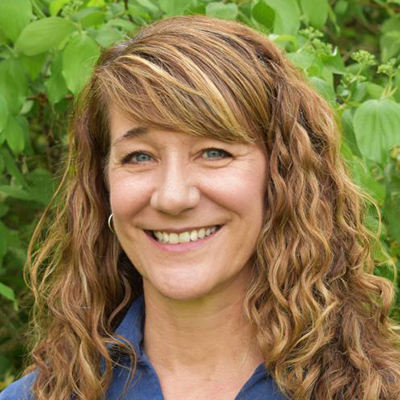
My primary research interest is the application of ecological theory to restoring ecosystems, particularly grassland. The Baer Lab studies above- and below-ground changes in structure and function during ecological restoration in response to environmental heterogeneity, interannual variability in climate, and intraspecific variation in population sources of dominant species. Much of our research has focused on agroecosystems restored to tallgrass prairie. We have found slow changes in total soil carbon pools on decadal scales, dependent on soil texture, but rapid recovery of easily decomposable organic matter pools that tie up available nitrogen as restoration proceeds. Different ecotypes of dominant species used in restoration can differentially affect species composition and traits with consequences for ecosystem processes. Some of these studies span multiple decades and demonstrate that restored grasslands are dynamic ecosystems both above and below ground, and our knowledge of these ecosystems remains in its infancy.
Speaker's Contact Information
- sgbaer@ku.edu
Bringing Climate Change Home: Making Climate Data Local, Visual, and Useful
Main Speaker: Dr. Deb Bathke
Nebraska State Climatologist , Nebraska State Climate Office
Other Speakers: Dr. Tonya Haigh, Social Science Coordinator, National Drought Mitigation Center
Date: 10/7/2026
Time: 3:30 PM
Location: 107 South (Platte River Auditorium)
Abstract
Nebraska stands at the crossroads of experiencing and addressing the challenges climate change brings. The Nebraska State Climate Assessment report provides a comprehensive analysis of critical insights across key sectors, emphasizing the urgency of implementing proactive strategies to mitigate risks, adapt to ongoing changes, and build a sustainable future for all Nebraskans. But will anyone use it?
In this presentation, we present recent efforts to bring the information in the Climate Assessment home to rural and urban communities in Nebraska. We share the perspectives of Extension Educators on using the information with their audiences, a graduate student project to improve the relevance of climate change communication in rural communities, and work with the city of Lincoln to understand future climate risks. Not just SNR faculty, but also an SNR Masters student and a UCARE undergraduate student! Bring your questions and your ideas!
Speaker's Bio
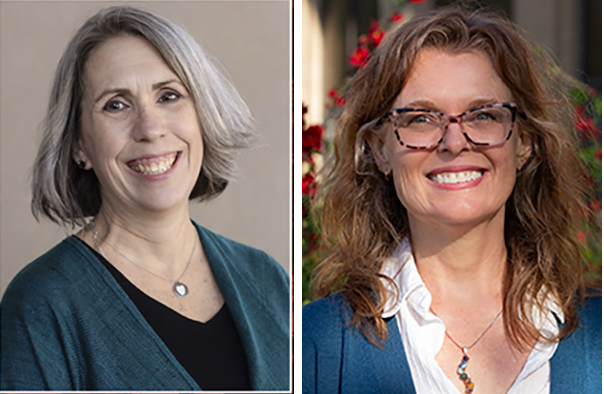
Dr Deb Bathke
In 2008, Dr. Bathke relocated from New Mexico to join the NDMC, the University of Nebraska-Lincoln’s School of Natural Resources and Department of Geosciences. Bathke spent the previous three years as the assistant state climatologist in New Mexico, where she chaired the state’s Drought Monitoring Working Group. She represented New Mexico in the Climate Assessment for the Southwest program, or CLIMAS, which is one of the National Oceanic and Atmospheric Administration’s Regional Integrated Science Assessment programs. Among the projects she collaborated on were adapting the Dynamic Drought Index for Basins in the Carolinas to the Southwest; implementing a western version of the AgClimate Tools developed by the Southeast Climate Consortium; and convening technical workshops on tree-ring reconstructions of streamflow. Bathke is supervising ongoing student research on urban landscaping and drought, and is on the Program Implementation Team of the National Integrated Drought Information System.
Dr. Tonya Haigh
Dr. Tonya Haigh is a Research Assistant Professor and the Social Science Coordinator and Project Coordinator for the National Drought Mitigation Center at the University of Nebraska - Lincoln. Dr. Haigh’s research focuses on the adaptive capacity of agricultural producers and others to cope with drought. Her research connects social science with climate science by informing the development of stakeholder-driven resources and tools. Dr. Haigh has worked with ranchers, advisors, and researchers to develop the Managing Drought Risk on the Ranch website and has provided social science expertise to the development of climate decision support tools for Corn Belt producers and specialty crop growers. Dr. Haigh’s academic and research expertise includes social theory related to climate risk management, survey development and administration, quantitative data collection and analysis, and qualitative data collection and analysis. Project management expertise includes outcome-based planning and evaluation.
Speaker's Contact Information
- dbathke2@unl.edu
Iron Teeth and 1000 Eyes: Developmental Keys to Extraordinary Animal Structures
Main Speaker: Dr. Rebecca Varney
Assistant Professor , School of Biological Sciences | UNL
Date: 10/14/2026
Time: 3:30 PM
Location: 107 South (Platte River Auditorium)
Abstract
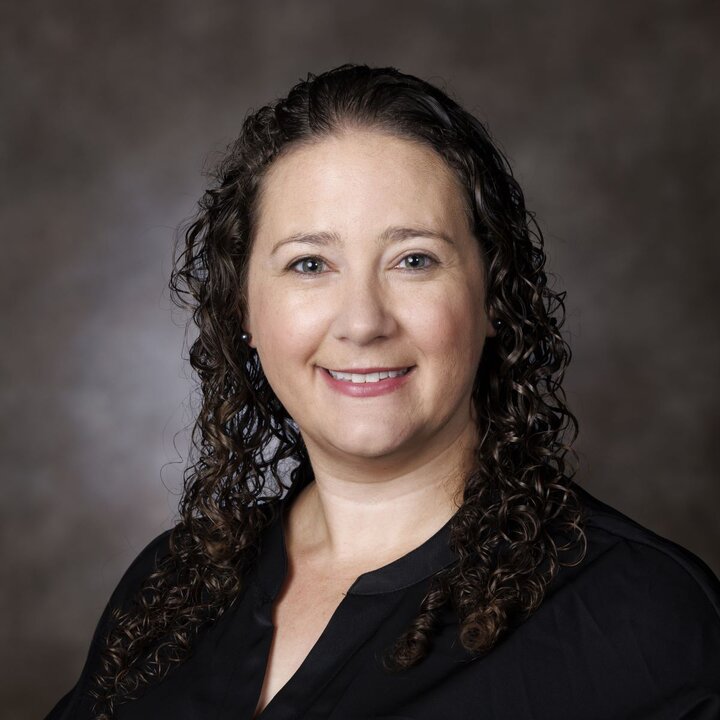
Iron presents a biological challenge: it is both essential and toxic. Chitons (Polyplacophora) evolved the extraordinary ability to use more iron to produce magnetite-coated teeth. Because adults generate new teeth throughout their lifetimes, research on chitons’ iron biomineralization has focused on mature animals. I will describe how we used developmental approaches to uncover the earliest stages of this process. By spawning multiple chiton species and tracking tooth formation, we found that iron deposition begins much earlier than expected. We also documented the formation of chiton-specific sensory organs, known as aesthetes, during shell plate patterning. Finally, I will present microCT evidence suggesting that adult chitons recycle iron as they produce successive generations of teeth. These findings establish a developmental framework for understanding iron biomineralization and lay the foundation for identifying the mechanisms that enable this complex biological process.
Speaker's Bio
Speaker's Contact Information
- rvarney3@unl.edu
No Glaciers, No Penguins; Rather Trees, Dinosaurs and Dunes in Antarctica - A Quaternary Eolian Researcher in the Czech Antarctic Research Program
Main Speaker: Dr. Jakub Holuša
Visiting Research Scientist , Department of Geography, Masaryk University, Czechia
Date: 10/21/2026
Time: 3:30 PM
Location: 107 South (Platte River Auditorium)
Abstract
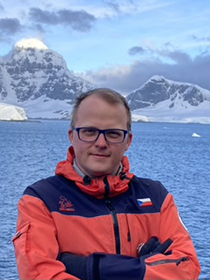
Antarctica is not just a piece of ice and home to penguins. Even though deglaciated/ice-free areas are spread only for over 0.32% of the continent’s surface, they contain the most unique terrestrial habitats in Antarctica. The habitats are full of life and enable conducting a research usually not possible in other parts of this icy continent. One of the largest deglaciated area in Antarctica can be found in the northernmost part of James Ross Island, i.e. the place, where the Czech J. G. Mendel Research Station is located. Penguin lovers can be disappointed because of the lack of large colonies of these tuxedo-wearing birds on the island, but if you wait, some of them might appear on a beach in front of the station. Polar scientists, on the other hand, appreciate absence of intensive bad smell coming from these colonies and a chance to study local rocks, landforms, permafrost and mosses or lichens. It is also possible to study trees there, even though they are petrified. Feel free to join the talk and absorb the experiences of a man who spent two austral summers in the most beautiful places on Earth.Speaker's Bio
Jakub holds a PhD in Physical Geography from Masaryk University in Brno, Czech Republic. His research primarily focuses on cold-climate aeolian dunes and their (palaeo-)environmental reconstruction in both past (Czech Republic, Slovakia) and present-day (Iceland, Antarctica) periglacial environments.
Seeking new challenges, he was awarded a Fulbright postdoctoral scholarship in 2026, allowing him to study the largest dune field in the Western Hemisphere, the Nebraska Sand Hills, under the supervision of Paul Hanson. In addition to aeolian research, Jakub has been involved in studies of glacier mass balance, proglacial environmental dynamics, polar soil development and biomedicine in Iceland and Antarctica.
In his free time, Jakub enjoys listening to rock music and cooking. He is a passionate soccer player and also enjoys playing volleyball, cycling, kayaking and hiking.
Speaker's Contact Information
- jholusa@unl.edu
Pattern, Process, and Strategic Conservation of Wildlife in Working Landscapes
Main Speaker: Dr. Dan Sullins
Research Wildlife Biologist , Kansas Cooperative Fish and Wildlife Research Unit
Date: 10/28/2026
Time: 3:30 PM
Location: 107 South (Platte River Auditorium)
Abstract
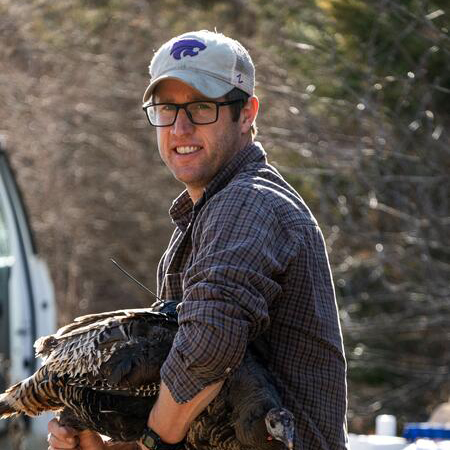
Working lands in the United States provide an array of food, fiber, and energy resources for a growing human population and can be critically important for wildlife habitat and population connectivity, particularly in Kansas and Nebraska, which are ~97% privately owned. Many game and nongame wildlife species have persisted and can thrive in these working landscapes composed of a mosaic of cropland, grazed pastures, and other working lands. Unfortunately, the continued intensification of agriculture and energy extraction, compounded by altered ecological drivers, threatens wildlife. For example, lesser prairie chickens have lost about 85% of their presumed historical habitat, northern bobwhites have declined 78% nationally, and mule deer and several grassland songbirds have experienced similar declines. My research has focused on generating applied science founded on basic population and landscape ecology principles to benefit declining wildlife species in working landscapes. Research produced by my lab and collaborators provides information that multiple stakeholders can use to target conservation efforts to strategic locations, inform population impacts of large-scale disturbances, and draw inferences based on the foraging ecology of wildlife. We have evaluated threats to grassland bird populations, including woody encroachment, conversion to cropland, and increased pesticide use. Provided evidence of Conservation Reserve Program grasslands providing nesting cover 3X greater than grazed pastures and providing refugia for lesser prairie-chickens during drought and following megafire. Demonstrated that raccoon (Procyon lotor) occupancy increased in areas with greater cropland and woody cover. Identified grassland composition (>60% within 5km) and woody cover as landscape constraints to habitat use for greater prairie-chickens and lesser prairie-chickens. Last, we evaluated habitat use and diets of wild turkeys (Meleagris gallopavo) and documented prevalent consumption of annual cicada by poults. Overall, the persistence of abundant wildlife populations in these working landscapes will require rigorous science to inform adaptive and strategic conservation among changing agricultural practices, land uses, and climate change.Speaker's Bio
Dr. Dan Sullins attended Texas A&M University where he graduated with a Bachelor Science in Wildlife and Fisheries in 2008. As an undergraduate he worked as a fisheries intern and upon graduation he worked multiple seasonal technician positions.
In spring 2010, he started graduate studies at Stephen F. Austin State University and since then he has conducted research related to the conservation of avian populations. As a PhD student and postdoctoral research associate at Kansas State University his work largely focused on lesser prairie-chicken ecology and conservation.
Speaker's Contact Information
- dsullins@usgs.gov
Multidimensional Application of 'Systematics: Silphium Plants and the Infinite Wasp Machine'
Main Speaker: Dr. Louis Natasi
Assistant Professor of Entomology , Department of Entomology | UNL
Date: 11/4/2026
Time: 3:30 PM
Location: 107 South (Platte River Auditorium)
Abstract
Species in the native plant genus Silphium (Asteraceae: Heliantheae) have emerged in recent years as desirable oilseed, forage, and biofuel crops. However, the taxonomy of the genus is poorly understood, causing issues for crop breeding, pest management, and related areas; roughly 20 species are recognized by most publications, but preliminary molecular, morphological, and ecological data suggest many species are improperly diagnosed, and that numerous undescribed species are present throughout eastern North America. Phytophagous and parasitic wasp communities associated with these plants are extremely species-rich, with over 50 species identified to date; the extreme host specificity of these wasps suggests that multidimensional taxonomic assessment of the entire system, using wasps as a guide, may provide enormous benefits toward understanding Silphium species identities, thereby enabling crop development for various purposes.Speaker's Bio
Dr Nastasi's work focuses on systematics of gall wasps (Hymenoptera: Cynipidae sensu lato) and their natural enemies (primarily Chalcidoidea), integrating molecular and collections-based methods to elucidate patterns in biodiversity and evolution, delimit and describe new taxa, and produce diagnostic resources such as identification keys. Ongoing projects emphasize the robust herb gall wasps (Aulacideini),slender herb gall wasps (Phanacidini), usurper gall wasps(Ceroptresini), and various gall wasp parasitoids (Eurytomidae and Ormyridae). Emerging projects involve gall wasp pests in crop systems and evaluation of gall wasps’ ability to delimit host plant taxa.Speaker's Contact Information
- lnastasi2@unl.edu
Climate Extremes and Irrigation Impacts Across Scales
Main Speaker: Dr. Liang Chen
Assistant Professor , School of Natural Resources | UNL
Date: 11/11/2026
Time: 3:30 PM
Location: 107 South (Platte River Auditorium)

Abstract
Hydroclimatic extremes pose significant risks to agriculture, water resources, and natural ecosystems. In this presentation, I will discuss the trends, mechanisms, and implications of different types of climate extremes, including droughts, heavy precipitation, and flood-drought transitions, based on observations and large-ensemble climate model simulations. Climate projections from the Coupled Model Intercomparison Project Phase 6 (CMIP6) suggest more frequent and rapid transitions in the central US, particularly from a wet spring to a dry summer, in a warming climate. Based on large-ensemble experiments from the Community Earth System Model version 2 (CESM2-LE), we identify two key atmospheric circulation patterns associated with extremely wet springs and extremely dry summers in the U.S. Midwest. The intensity of wet extremes is expected to increase mainly due to a northward shift of the North American westerly jet and enhanced Great Plains low-level jet. The second part of my talk will focus on the role of land-atmosphere interactions in precipitation and temperature extremes, with an emphasis on the impacts of vegetation dynamics, soil moisture variability, and irrigation practice. We find that enhanced vegetation growth may increase the risk of rapid drought development through vegetation-soil moisture feedbacks, which can be amplified during the wet-spring-to-dry-summer transitions. Although irrigation can alleviate local heat and drought conditions, it may also produce hydroclimatic trade-offs through changes in atmospheric humidity and regional circulation, respectively.Speaker's Contact Information
- liangchen@unl.edu
From Fire to Recovery: Soil Health Response to the Bovee and Morrill Wildfires
Main Speaker: Dr. Caro Córdova
Soil Health Scientist , Department of Agronomy and Horticulture and School of Natural Resources | UNL
Date: 11/18/2026
Time: 3:30 PM
Location: 107 South (Platte River Auditorium)
Abstract
Wildfire is an important ecological process in the Nebraska Sandhills, but its effects on soil recovery depend strongly on vegetation type. Following the 2022 Bovee Fire, we tracked microbial communities, enzyme activity, respiration, and nitrogen mineralization across native grasslands, ponderosa pine, and eastern redcedar woodlands. Grassland soils recovered rapidly and retained greater carbon-cycling capacity, whereas eastern redcedar soils showed persistent reductions in microbial activity and slower recovery. These findings highlight the value of conserving intact grasslands and managing woody encroachment to strengthen soil health and resilience after fire.Speaker's Bio
Hi, I am Caro Cordova, an agroecologist who specializes in soil health and ecosystem processes, with experience working in the United States and Latin America. Recently moved from the Great Lakes to the Great Plains to work for and with Nebraska farmers. Teaming up with a diverse group of researchers, stakeholders, and practitioners to build resilient farms and improve Nebraska soil health.Speaker's Contact Information
- carolina.cordova@unl.edu
TBD
Main Speaker: Dr. Andrew Margenot
Associate Professor , Department of Crop Science, University of Illinois Urbana-Champaign
Date: 12/2/2026
Time: 3:30 PM
Location: 107 South (Platte River Auditorium)
Speaker's Bio
Dr. Margenot addresses the literal foundation of all cropping systems: soils. He advances how we monitor and manage soils as natural capital. His research team evaluates how human activities can enhance or compromise soil services to human societies, with an emphasis on food security from urban and rural agroecosystems in the U.S. Midwest and East Africa.Speaker's Contact Information
- margenot@illinois.edu
Seminar & Discussions Archives
The School of Natural Resources, its faculty and affiliated programs sponsor various seminar and discussion series. Unless otherwise indicated, all are open to the public.