Search Projects Story Archive
Info
Research projects listed on this page represent a sampling of project from the last year. Please use the search box above to investigate our research project archive.
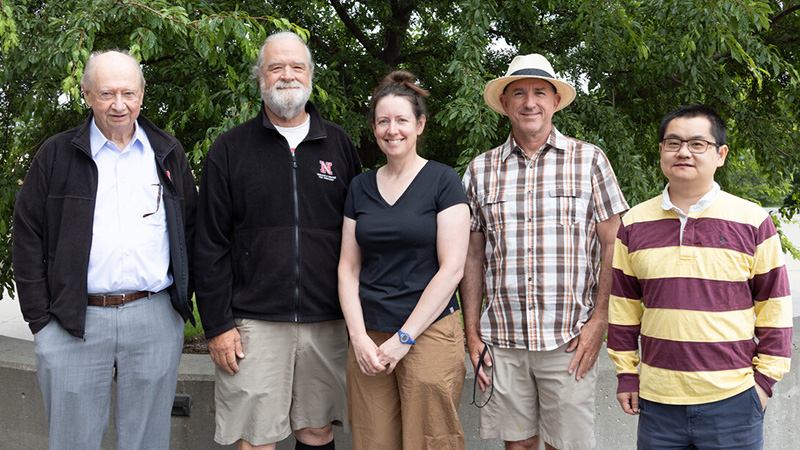
NSF-funded project explores potential ally against harmful algal blooms
Toxic cyanobacterial blooms can close lakes, contaminate drinking water and pose risks to human health. A new project at the University of Nebraska–Lincoln is exploring an unlikely tool for mitigating these blooms: virovory, the phenomenon of organisms eating viruses as a food source. (6/9/2026)
Continue the Story

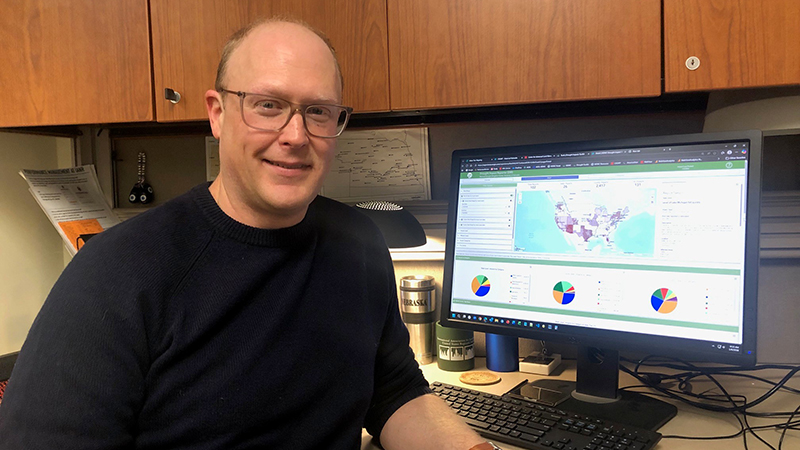
Ratcliffe maps out a career in natural resources
Ian Ratcliffe, a specialist in geographic information systems at the University of Nebraska–Lincoln, works behind the scenes to manage and analyze data and help visualize it with maps. (1/22/2026)
Continue the Story
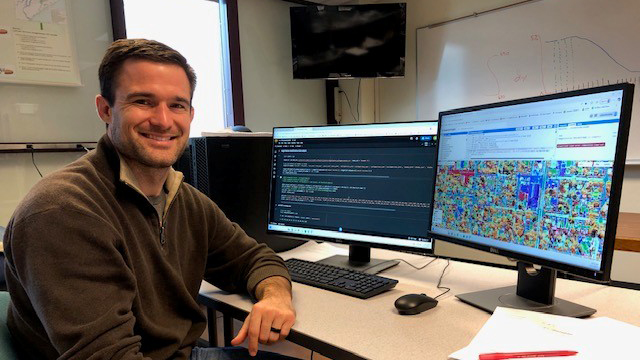
CALMIT offers low-cost tree maps to towns and cities
Hugh Ellerman offers cities and towns low-cost maps of their tree canopies. A University of Nebraska-Lincoln postdoctoral researcher, Ellerman found a way to make the maps inexpensively during doctoral work with the Center for Advanced Land Management Information Technologies. (1/5/2026)
Continue the Story
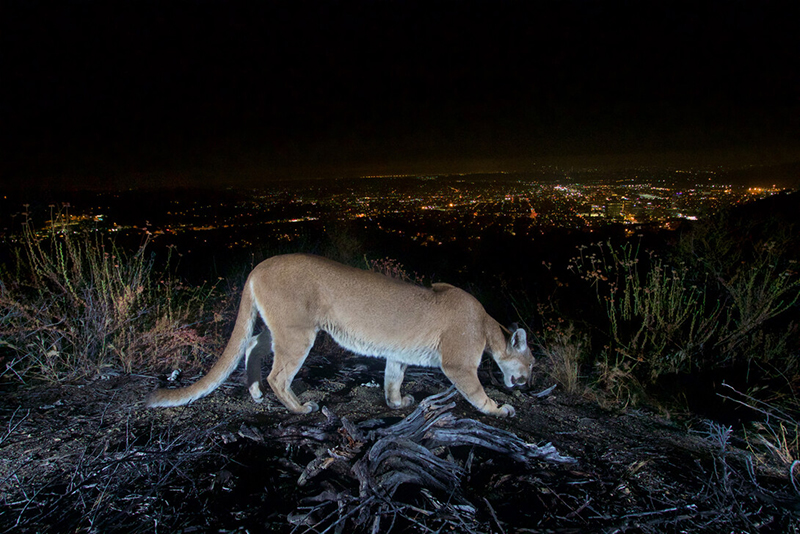
Roads, development disrupt movement of young mountain lions in California
A new study led by Nebraska's John Benson and Kyle Doughtery shows young mountain lions in California struggle to disperse between populations because they avoid developed areas and busy roads, limiting the gene flow needed to keep populations healthy. The study shows that freeways and human development isolate vulnerable populations, while small habitat patches and potential wildlife crossings could help restore connectivity.
Nebraska in the national news: November 2025
University of Nebraska–Lincoln faculty members were interviewed about the impacts of tariffs and “forever chemicals” for national and international news stories in November. The articles were among 30-plus such stories featuring Husker faculty, staff, students, centers and programs during the month.
(12/3/2025)
Continue the Story
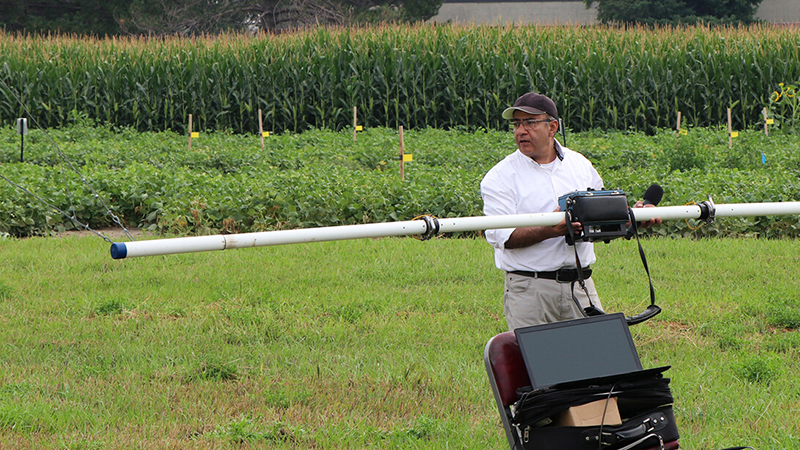
Conservation and Survey Division geoscientist's innovative approach aims to safeguard irrigation canals
Irrigation canal maintenance in western Nebraska is taking a giant step forward thanks to an innovative, non-invasive method by Husker geoscientist Mohamed Khalil to check canal integrity. (10/30/2025)
Continue the Story
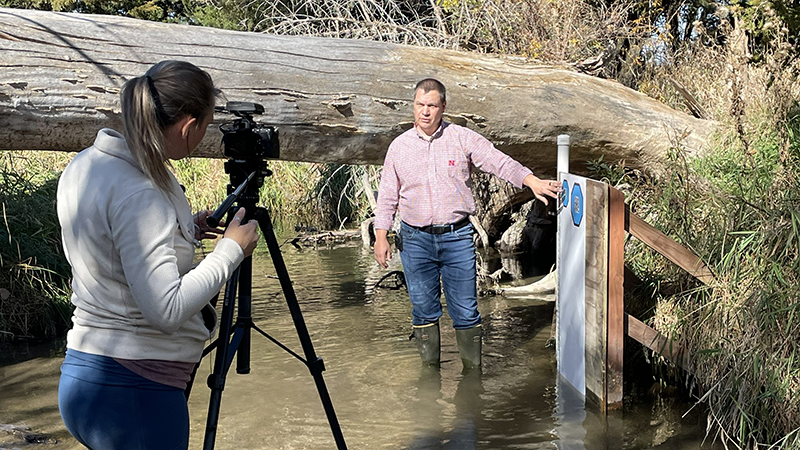
Huskers launch GRIME AI, boosting research using camera networks
Troy Gilmore, hydrology professor, and John Stranzl, doctoral student, have opened the gates on water research through the launch of GRIME AI online Sept. 16, 2025 (10/28/2025)
Continue the Story

Das Choudhury explores ethical use of GenAI in new book and classes
Sruti Das Choudhury has seen how generative AI has turned the world into a new type of Wild West . . . with no sheriff in sight. (10/7/2025)
Continue the Story
Significant Workshops
Implications of a Changing Arctic on the Water Resources and Agriculture in the Central U.S. (2015)
The focus of this workshop was on how the significant climatic and environmental changes being observed in the Arctic may be affecting changes in mid-latitude weather and the implications of these changes on the frequency of extreme weather and climate events (e.g., severe weather, droughts, floods, heat waves) in the Central U.S.
Climate Change Implications for Nebraska (2014-2016)
In September 2014, the University of Nebraska published a report summarizing climate change impacts to the state. This comprehensive report summarized the current understanding of climate change science, projected changes in climate for Nebraska and the implications of these changes for some of the state’s primary sectors. Eight roundtable discussion focusing on areas such as wildlife, human health, energy availability were conducted and summarized.