My Story
Hi, I’m Dawn Kopacz, an Associate Professor of Practice and an Atmospheric Science Education Researcher with the School of Natural Resources.
I discovered atmospheric science through an introductory weather and climate course in college where the professor began each class with a discussion of current weather events. I was immediately hooked. As a graduate student, I studied climate change while working as a teaching assistant and operational meteorologist through our department's student-run forecast service, Innovative Weather. Although I loved weather forecasting and climate research, I found myself equally drawn to teaching and mentoring. Over time, that interest evolved into broader questions about how people learn, communicate, and use weather and climate information.
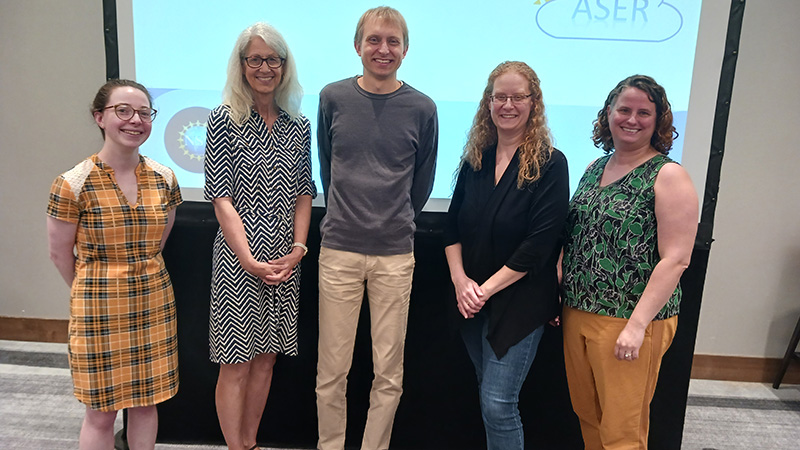 Organizers of the inaugural ASER Workshop, held in Minneapolis, MN, in May 2023. This was a community-building effort designed to advance atmospheric science education research through mentoring, collaboration, and professional development.
Working with colleagues from across the country, I helped establish the Atmospheric Science Education Research (ASER) community and its growing network of scholars. I have led and contributed to national projects examining active learning, student belonging and persistence in STEM, and science communication training. As communities face increasingly complex challenges related to weather, climate, and the environment, understanding how scientific knowledge is communicated and applied has become more important than ever. My research also includes the development of a database cataloging misconceptions related to weather, climate, and climate change that have been identified in the literature, as well as studies examining how individuals interpret and respond to flash flood information during high-impact weather events. My work has been supported by the National Science Foundation, the University of Nebraska-Lincoln College of Arts and Sciences, and the Department of Earth and Atmospheric Sciences.
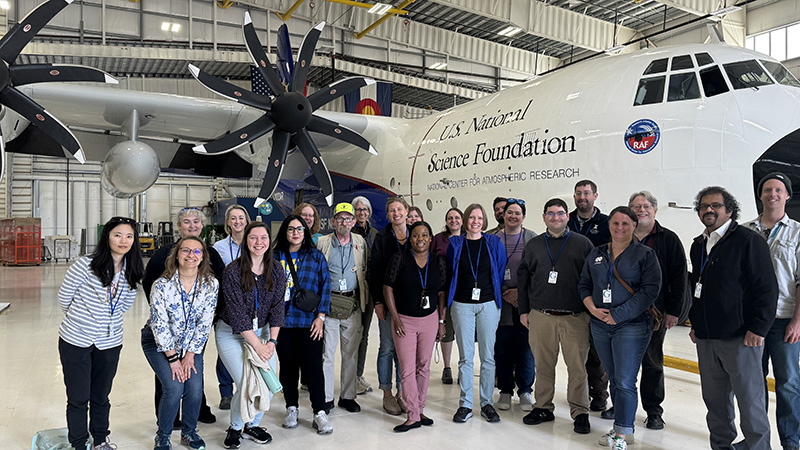 Workshop participants visited NSF NCAR's Research Aviation Facility (RAF) to learn how research aircraft are modified for scientific observations and how airborne field campaigns are planned and conducted.
From the classroom to the community, these projects are united by a common goal: to better understand how scientific information can be communicated in ways that are meaningful, actionable, and responsive to community needs. Ultimately, I hope this work strengthens connections between science and society and helps people navigate complex environmental challenges and make decisions that support resilient communities.
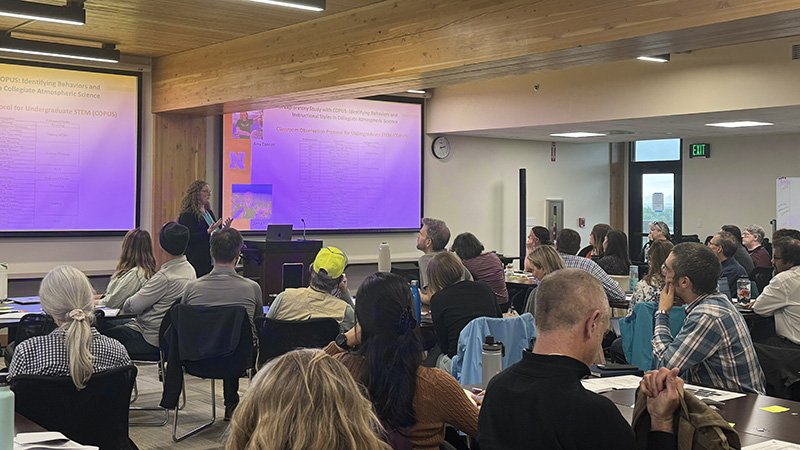 Dawn Kopacz presents an overview of the history of ASER, highlighting key milestones, community growth, and emerging research directions.
Outside of work, I enjoy spending time with my family and taking advantage of opportunities to be outdoors whenever I can, no matter the weather.
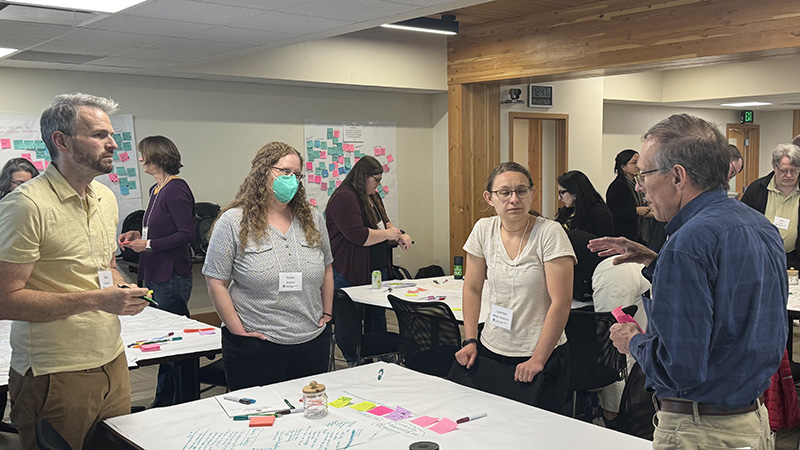 Participants in the ATS + ASER Community Workshop held in Fort Collins, CO in May 2025 explored how atmospheric science field campaigns support student learning and professional development.